How to Remove Seeds From Jalapeños Quickly
Learn three fast methods for removing jalapeño seeds and ribs — the spoon scrape, the core-and-roll, and the water rinse — to control heat in any recipe.
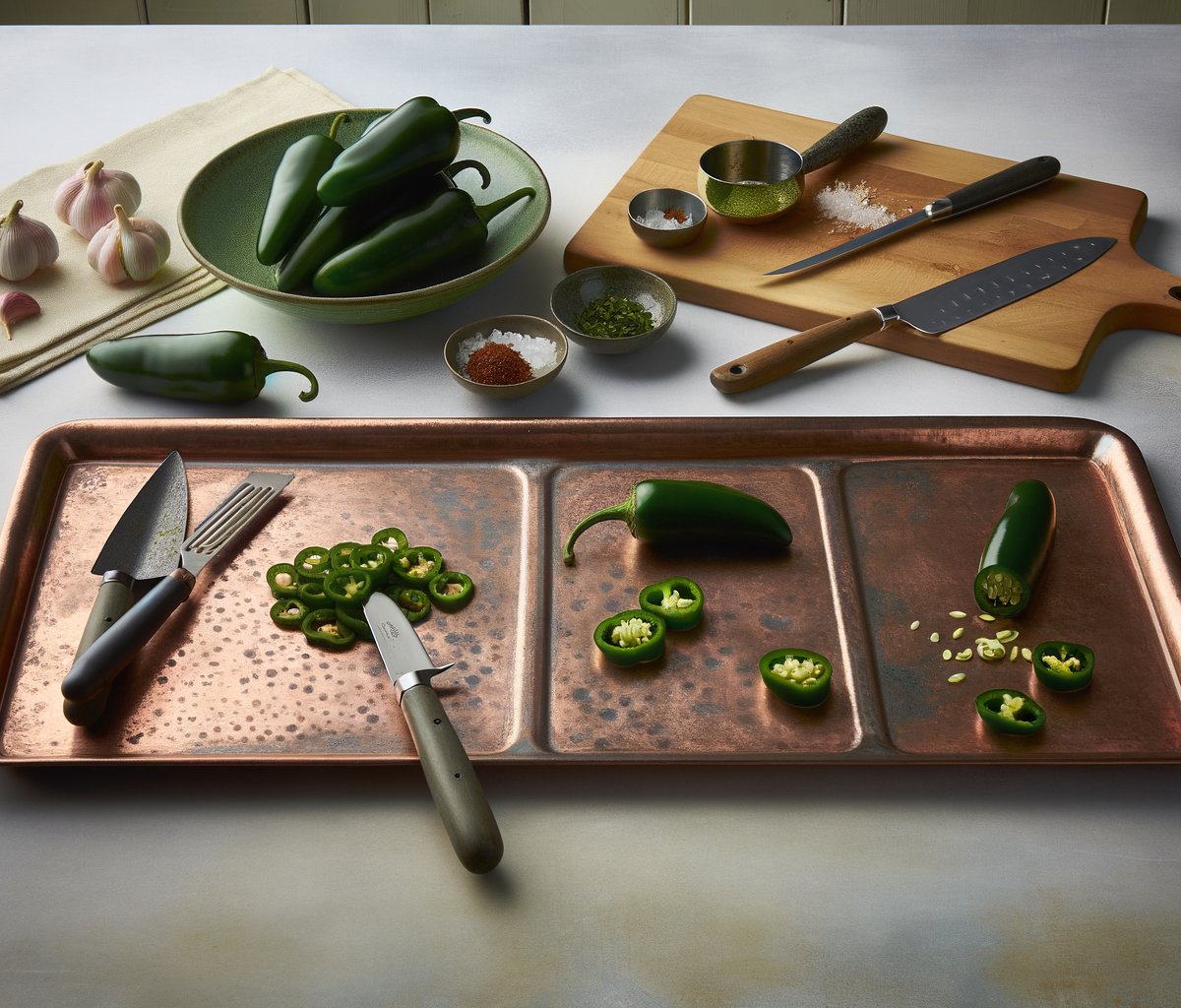
How to Remove Seeds From Jalapeños Quickly
Removing the seeds and white ribs from jalapeños is the fastest way to reduce their heat while keeping all that bright, grassy jalapeño flavor. The process takes just a few seconds per pepper once you know the technique, and there are three reliable methods depending on how many peppers you're processing and how you plan to cut them.
Contrary to popular belief, the seeds themselves aren't the hottest part of a jalapeño. The white pith — also called the placental membrane or ribs — that runs along the interior walls is where capsaicin concentrates most heavily. Seeds taste hot primarily because they sit in direct contact with this membrane. Removing both the ribs and seeds can reduce a jalapeño's perceived heat by 50 percent or more.
Method 1: The Spoon Scrape (Best for Halved Peppers)
This is the most common and versatile method. It works perfectly when you're making jalapeño boats for poppers, dicing peppers for salsa, or preparing any recipe where the pepper gets halved first.
Steps
- Cut the jalapeño in half lengthwise from stem to tip
- Hold one half in your non-dominant hand, cut side up
- Use a small spoon, grapefruit spoon, or melon baller to scrape from the stem end to the tip
- Press firmly enough to remove the white ribs and seed cluster in one or two passes
- Tap the pepper half against the cutting board to dislodge any remaining seeds
- Repeat with the other half
Speed: About 5 to 8 seconds per pepper once you're practiced.
Pro tip: A grapefruit spoon with serrated edges works better than a regular spoon because it catches the ribs more effectively. A melon baller's curved edge also fits the pepper's interior contour perfectly.
Method 2: The Core and Roll (Best for Keeping Peppers Whole)
When you need whole jalapeños — for stuffing, roasting, or charring — this method removes the seeds without splitting the pepper open.
Steps
- Hold the jalapeño firmly and cut around the stem in a circle, about 1/4 inch deep
- Twist and pull the stem — the seed core should come out attached, like removing the top of a bell pepper
- If the core doesn't pull cleanly, insert a thin knife along the inside wall and loosen it
- Roll the pepper between your palms over a bowl — this dislodges remaining loose seeds
- Tap the open end against your palm or the cutting board to shake out stragglers
- For a thorough clean, insert a chopstick or the handle of a wooden spoon and scrape the interior walls
Speed: About 10 to 15 seconds per pepper.
Best for: Whole roasted jalapeños, stuffed peppers where you want the pepper intact, and recipes like fermented hot sauce where you want clean pepper flesh.
Method 3: The Water Rinse (Best for Large Batches)
When you're processing a large quantity of jalapeños — for canning, pickling, or making a big batch of salsa — this method combines speed with thoroughness.
Steps
- Halve all jalapeños lengthwise (assembly-line style)
- Working in batches of 5 to 10 halves, scrape seeds and ribs with a spoon into a bowl
- Place the scraped halves in a colander
- Rinse under cold running water, using your thumb to wipe away any clinging seeds
- Shake the colander to drain and pat dry
Speed: About 3 to 4 seconds per pepper half once you're in a rhythm.
Note: The water rinse is slightly controversial among purists who argue that rinsing washes away some flavor. In practice, the flavor difference is minimal, and the convenience of cleaning 20 or 30 peppers quickly outweighs any subtle loss.
How Much Heat Does Seed Removal Actually Reduce?
The effect is significant but not absolute. Here's a rough guide:
| Preparation | Approximate Heat Level |
|---|---|
| Whole jalapeño, seeds and ribs intact | 100% (full heat) |
| Seeds removed, ribs intact | ~80% |
| Seeds and ribs removed (scraped clean) | ~40–50% |
| Seeds, ribs removed, and rinsed | ~30–40% |
The outer flesh of a jalapeño contains some capsaicin too — you can't reduce the heat to zero without removing the pepper entirely. But taking out the ribs and seeds transforms a jalapeño from potentially eye-watering to pleasantly warm for most people.
Tools That Make Seed Removal Easier
You don't need special equipment, but a few tools speed things up:
- Grapefruit spoon: Serrated edge grips ribs and seeds effectively
- Melon baller: Curved shape matches the pepper interior
- Jalapeño corer tool: A dedicated tool shaped like a narrow cylinder that cores whole peppers. Worth buying if you make stuffed peppers often
- Small paring knife: Good for precision work on larger peppers like poblanos or Anaheims
- Chopstick: Perfect for pushing seed cores out of whole peppers
Safety Tips
Capsaicin is concentrated in the ribs you're removing, so seed removal is actually the highest-risk step for skin contact:
- Wear disposable nitrile gloves, especially when processing more than 3 or 4 peppers
- Work on a dedicated cutting board that you can wash immediately after
- Don't touch your face, eyes, or contact lenses until you've washed your hands thoroughly with soap
- If you get capsaicin on your skin, wash with dish soap and then rub with vegetable oil or rubbing alcohol — capsaicin is oil-soluble, not water-soluble
- Keep a bowl of milk or yogurt nearby as an emergency capsaicin neutralizer
What to Do With the Seeds
Don't throw those seeds away — they have uses:
- Save for planting: Dry seeds on a paper towel for a week, then store in a cool, dark place. They'll germinate the following spring. See our starting from seed guide for planting instructions.
- Make chili flakes: Dehydrate the seeds and ribs at 135°F for 6 to 8 hours, then grind into spicy flakes
- Infuse oil: Add fresh seeds and ribs to olive oil in a sealed jar. Refrigerate for 1 to 2 weeks for a spicy finishing oil
- Compost them: Seeds and ribs break down readily in a compost bin
Frequently Asked Questions
Do I need to remove jalapeño seeds for salsa?
It depends on your heat preference. Traditional Mexican salsas often include seeds for full flavor and heat. If you're serving guests with varying spice tolerances, remove the seeds and add heat back with a pinch of cayenne or hot sauce — that way you control the heat level precisely.
Can I remove seeds after cooking?
It's much harder after cooking because the ribs soften and the seeds scatter throughout the dish. Always remove seeds before cooking if you want a milder result. The one exception is whole roasted peppers — you can split them open after roasting and scrape out the softened interior fairly easily.
Will removing seeds change the flavor of my jalapeño?
Slightly. The ribs contribute a mild bitterness in addition to heat. Removing them makes the overall flavor cleaner and sweeter. Most people find de-seeded jalapeños taste brighter and more purely "peppery" without the heat masking other flavor notes.
Is it faster to buy pre-sliced jalapeños without seeds?
Jarred and canned sliced jalapeños come pre-seeded, which saves time. However, they have a softer texture and a vinegary flavor from the pickling brine that differs significantly from fresh. For fresh applications like salsa, guacamole, and garnishes, removing seeds from fresh peppers takes only seconds per pepper and produces a far superior result.
More from the Blog
How to Roast Jalapeños: 4 Methods Compared
From oven broiler to air fryer, here are four tried-and-true methods for roasting jalapeños to smoky, blistered perfection — with temps, times, and pros and cons for each.
BlogHow to Reduce Jalapeño Heat Without Losing Flavor
Too much jalapeño burn? These six techniques tame the heat while keeping the pepper flavor you love — from seed removal to acid balancing and smart substitutions.
BlogHow to Make Chipotles at Home: Smoke Your Own Jalapeños
Turn ripe red jalapeños into rich, smoky chipotles at home using a smoker, charcoal grill, or even your oven. Plus, learn how to make your own adobo sauce from scratch.