How to Cut Jalapeños for Every Recipe: Rings, Dice, Boats
Master the essential jalapeño cuts — rings, dice, brunoise, boats, and strips — with step-by-step instructions for every cooking application.
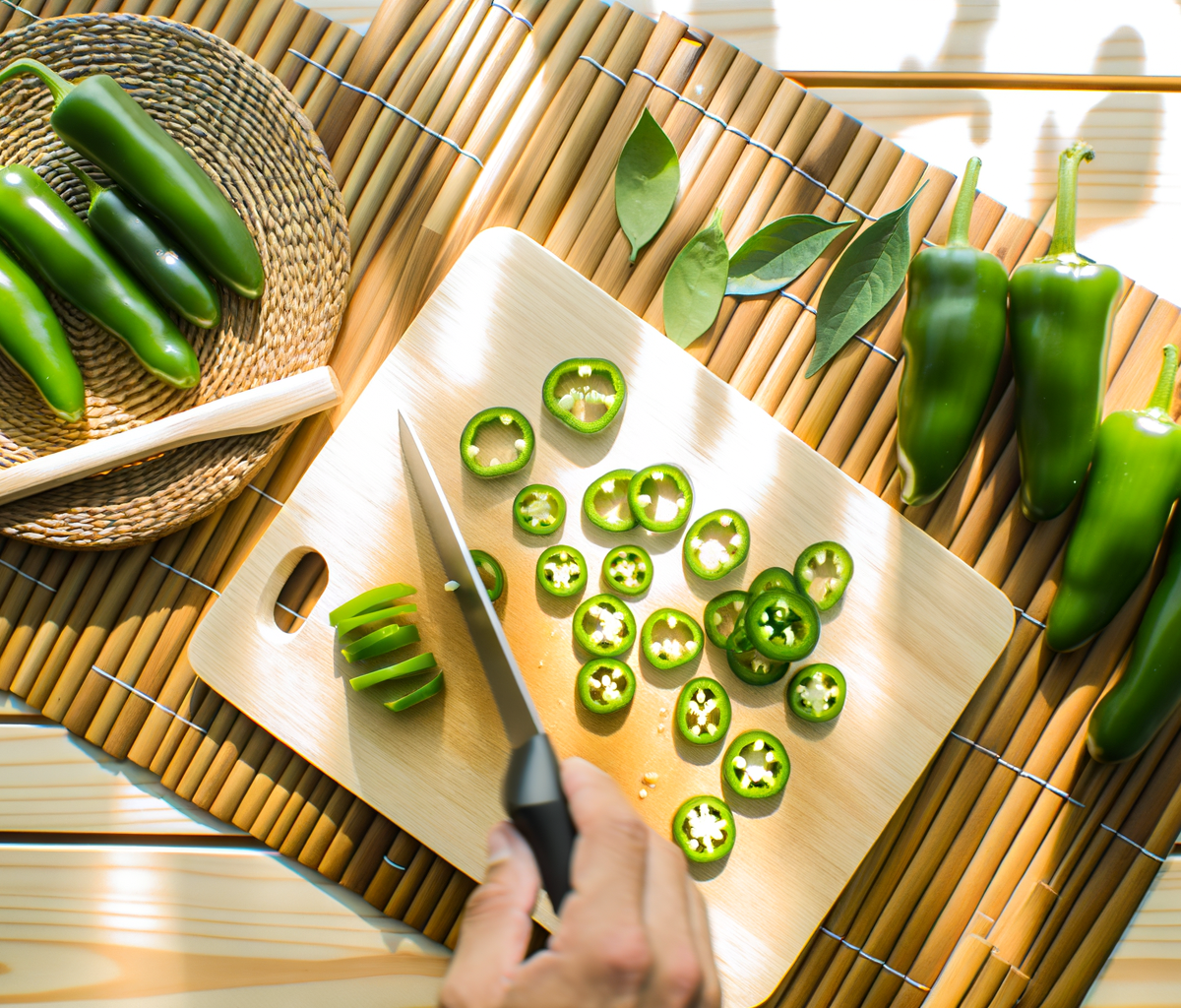
How to Cut Jalapeños for Every Recipe: Rings, Dice, Boats
The way you cut a jalapeño determines how its heat and flavor distribute through your dish. Thin rings melt into nachos, fine dice disappears into salsa, thick boats hold stuffing for poppers, and long strips add crunch to sandwiches. Mastering a few simple cuts gives you complete control over your jalapeño game, and it all starts with a sharp knife, a stable cutting board, and a basic understanding of pepper anatomy.
Before you make any cuts, a quick note on safety: jalapeño oils (capsaicin) can irritate skin and eyes. Wear disposable gloves if you're cutting more than one or two peppers. If you skip gloves, wash your hands thoroughly with dish soap — not just water — when you're done, and avoid touching your face.
Understanding Jalapeño Anatomy
Knowing the parts of a jalapeño helps you control heat in every cut:
- Outer flesh: Mildest part, provides crunch and flavor
- Ribs (placental tissue): The white membrane running down the interior. This is where most of the capsaicin concentrates — not the seeds
- Seeds: Mildly hot due to contact with the ribs, but not the primary heat source
- Stem end: Tough and fibrous, always discard
Removing the ribs and seeds reduces heat significantly. Leaving them in keeps full intensity. Choose based on your recipe and heat preference.
Cut 1: Rings (Rounds)
Best for: Nachos, pizza, pickled jalapeños, sandwich toppings, garnishes
Rings are the fastest, easiest cut and work for any application where you want visible jalapeño pieces with consistent heat.
How to Cut Jalapeño Rings
- Wash the jalapeño and pat dry
- Trim off the stem end (about 1/4 inch)
- Hold the pepper firmly and slice crosswise into rounds
- For nachos and pizza: cut 1/8-inch thick rings
- For pickling: cut 1/4-inch thick rings
- For sandwich toppings: cut 1/8 to 1/4-inch thick rings
Leave the seeds and ribs in for full heat. For milder rings, use the tip of your knife to flick out the seed cluster from each ring after cutting.
Cut 2: Dice
Best for: Salsa, guacamole, cornbread, stir-fries, relishes, jalapeño cream sauce
Diced jalapeño distributes heat and flavor evenly throughout a dish. The size of your dice matters:
- Large dice (1/4 inch): Noticeable pieces with distinct crunch
- Small dice (1/8 inch): Blends into salsas and sauces
- Brunoise (1/16 inch): Nearly invisible, adds heat without texture
How to Dice a Jalapeño
- Cut the jalapeño in half lengthwise
- Use a spoon or knife to scrape out seeds and ribs (for milder result) or leave them in
- Place each half cut-side down on the board
- Make lengthwise cuts at your desired dice width
- Rotate 90 degrees and make crosswise cuts at the same width
- Gather and chop any uneven pieces to uniform size
Cut 3: Julienne (Strips)
Best for: Fajitas, stir-fries, banh mi, salads, garnishes
Long thin strips cook quickly and add visual appeal. They're the cut of choice for fajitas and Asian-inspired dishes.
How to Julienne a Jalapeño
- Cut the jalapeño in half lengthwise
- Remove seeds and ribs if desired
- Place each half cut-side down
- Slice lengthwise into strips 1/8-inch wide
- For longer strips, leave the pepper whole, slice off both ends, make a lengthwise cut to open it flat, remove ribs, then slice into strips
Cut 4: Boats (Halves for Stuffing)
Best for: Jalapeño poppers, stuffed peppers, baked appetizers, grilled jalapeños
Boats are halved jalapeños with the seeds removed, creating a cavity for filling. This is the essential cut for poppers.
How to Cut Jalapeño Boats
- Wash the jalapeño and pat dry
- Cut in half lengthwise from stem to tip
- Keep the stem attached — it acts as a handle
- Use a small spoon or melon baller to scoop out all seeds and white ribs
- Scrape the interior clean for a milder result, or leave some ribs for extra heat
- Fill with cream cheese, cheddar, or your preferred stuffing
For extra-large boats perfect for generous fillings, use Mucho Nacho or Craig's Grande jalapeño varieties.
Cut 5: Minced
Best for: Marinades, dressings, compound butter, rubs
Mincing is simply taking a fine dice even further. The goal is an almost paste-like consistency where the jalapeño integrates completely into liquid-based preparations.
How to Mince a Jalapeño
- Start with a fine dice (see above)
- Gather the diced pieces into a pile
- Rock your knife blade back and forth over the pile, using your non-knife hand on the spine for control
- Continue until pieces are as fine as possible
- Scrape and re-gather as needed
Cut 6: Whole Roasted or Charred
Best for: Blistered jalapeño appetizers, roasted salsa, charred garnishes
Sometimes the best cut is no cut at all. Whole jalapeños can be charred on a gas stove or grill for smoky, blistered flavor. Simply wash, dry, and leave them whole — the skin blisters and chars while the interior steams, creating a complex flavor transformation.
Tips for Cleaner Cuts
- Use a sharp knife: A dull knife slips on the waxy skin, increasing the risk of uneven cuts and injury
- Dry the pepper: Moisture makes jalapeños slippery. Pat dry with a paper towel before cutting
- Cut-side down: When making secondary cuts, always place the flat/cut side against the board for stability
- Chill first: Refrigerator-cold jalapeños are firmer and easier to cut precisely than room-temperature ones
- Batch processing: If cutting many jalapeños, halve them all first, then seed them all, then make your final cuts. Assembly-line style is faster than processing one pepper at a time
Heat Control by Cut Style
How you cut affects the perception of heat:
| Cut Style | Heat Distribution | Notes |
|---|---|---|
| Whole/halves | Concentrated | Bite gives a burst of heat |
| Rings with seeds | High, uneven | Some bites hotter than others |
| Rings without seeds | Moderate, even | Consistent mild heat |
| Dice with ribs | High, distributed | Heat in every bite |
| Dice without ribs | Low, distributed | Flavor with gentle warmth |
| Minced | Fully distributed | Heat blends into the dish |
Frequently Asked Questions
Should I wear gloves when cutting jalapeños?
For one or two peppers, gloves are optional — just wash your hands well with soap afterward. If you're cutting five or more, or if you have sensitive skin, wear disposable nitrile or latex gloves. The capsaicin builds up on your skin with each pepper and can cause a burning sensation that lasts for hours.
How do I stop the burning if I touch my eyes after cutting?
Flush your eyes with cool water for several minutes. Milk or a saline solution can also help neutralize the capsaicin. For skin burning on your hands, wash with dish soap and then rub with vegetable oil or rubbing alcohol, which dissolve capsaicin better than water alone.
Can I cut jalapeños ahead of time?
Yes. Cut jalapeños keep well in an airtight container in the refrigerator for 3 to 4 days. For longer storage, spread cut jalapeños on a parchment-lined baking sheet, freeze until solid, then transfer to a freezer bag for up to 6 months. They'll be soft when thawed but perfect for cooking.
What's the fastest way to cut a lot of jalapeños?
The assembly-line method is fastest: slice all peppers in half lengthwise, scoop all seeds at once using a grapefruit spoon, then stack 2 to 3 halves and cut through them simultaneously. An experienced cook can process 20 jalapeños in under 10 minutes this way.
More from the Blog
How to Roast Jalapeños: 4 Methods Compared
From oven broiler to air fryer, here are four tried-and-true methods for roasting jalapeños to smoky, blistered perfection — with temps, times, and pros and cons for each.
BlogHow to Reduce Jalapeño Heat Without Losing Flavor
Too much jalapeño burn? These six techniques tame the heat while keeping the pepper flavor you love — from seed removal to acid balancing and smart substitutions.
BlogHow to Make Chipotles at Home: Smoke Your Own Jalapeños
Turn ripe red jalapeños into rich, smoky chipotles at home using a smoker, charcoal grill, or even your oven. Plus, learn how to make your own adobo sauce from scratch.