Why Are My Jalapeño Leaves Turning Yellow? 7 Causes & Fixes
Yellowing jalapeño leaves are usually caused by overwatering, nutrient deficiencies, or pest damage. Here are 7 common causes and exactly how to fix each one.
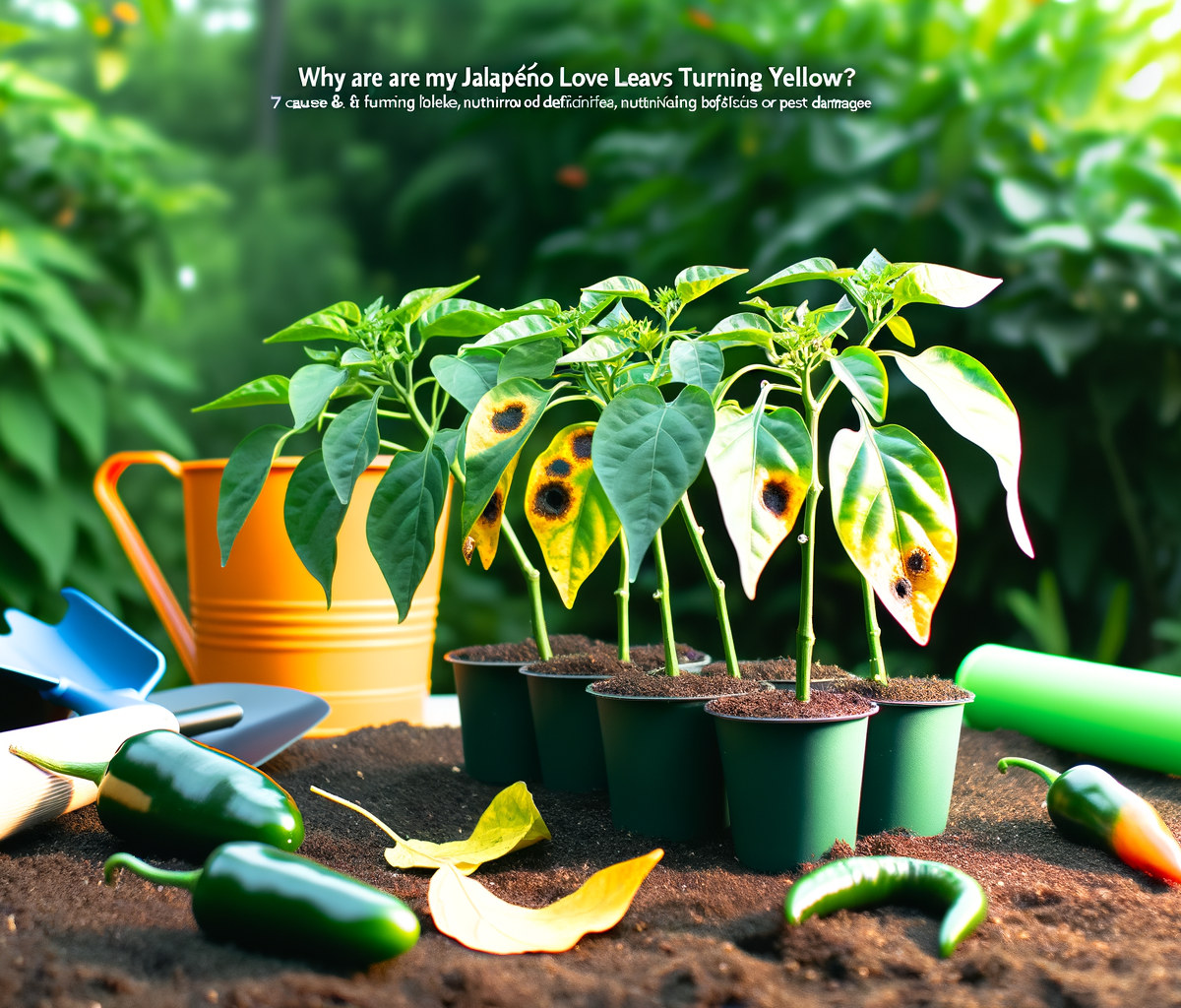
Why Are My Jalapeño Leaves Turning Yellow? 7 Causes & Fixes
Jalapeño leaves turn yellow most commonly because of overwatering, nitrogen deficiency, or pest infestations. If the lower leaves are yellowing first and the soil feels soggy, overwatering is the likely culprit. If yellowing is uniform across the plant and growth has slowed, a nutrient deficiency, especially nitrogen, is the most probable cause. Below, we break down all seven causes so you can diagnose your plant and fix the problem quickly.
1. Overwatering
Overwatering is the single most common reason for yellow jalapeño leaves. When roots sit in waterlogged soil, they can't absorb oxygen and begin to suffocate. This leads to root rot, which manifests as yellowing and wilting leaves, even though the soil is wet.
How to Identify It
- Lower leaves yellow and drop first
- Soil feels constantly moist or soggy
- Stems may feel soft at the base
- A sour or musty smell from the soil
How to Fix It
- Let the soil dry out until the top 1-2 inches feel dry before watering again
- Ensure your container has drainage holes (critical for container growing)
- If the root rot is severe, repot into fresh, dry potting mix and trim away brown, mushy roots
- Water deeply but infrequently, typically every 3-5 days depending on conditions
2. Nitrogen Deficiency
Nitrogen is essential for leaf growth and chlorophyll production. When your plant doesn't get enough, leaves turn pale green and then yellow, starting from the bottom of the plant and working upward.
How to Identify It
- Oldest (lowest) leaves yellow first and may drop off
- Overall plant growth slows noticeably
- New leaves are small and pale green
- Stems may appear thin and spindly
How to Fix It
- Apply a nitrogen-rich fertilizer such as a balanced 10-10-10 or blood meal
- Side-dress with compost or worm castings for a slower organic release
- For a quick boost, use a diluted fish emulsion (5-1-1) as a foliar spray or soil drench
- For a deeper dive into feeding schedules and NPK ratios, see our fertilizer guide
3. Pest Damage
Several pests feed on jalapeño leaves and cause yellowing, stippling, or curling. The most common culprits are aphids, spider mites, and whiteflies.
How to Identify It
- Aphids: Tiny green, black, or white insects clustered on leaf undersides and new growth. Leaves curl and yellow. Sticky honeydew residue on leaves.
- Spider mites: Extremely small, nearly invisible. Look for fine webbing on leaf undersides and tiny yellow or white speckles on the leaf surface.
- Whiteflies: Small white flying insects that scatter when you disturb the plant. Yellow spots on leaves and sticky residue.
How to Fix It
- Blast plants with a strong spray of water to knock off aphids and mites
- Apply insecticidal soap or neem oil spray every 5-7 days until the infestation clears
- Introduce beneficial insects like ladybugs if growing outdoors
- For a comprehensive breakdown of jalapeño pests and organic treatments, visit our pests and diseases guide
4. Nutrient Deficiency (Beyond Nitrogen)
Deficiencies in magnesium, iron, or potassium also cause yellowing with distinct patterns:
- Magnesium: Yellowing between veins while veins stay green (interveinal chlorosis) on older leaves. Fix with 1 tablespoon Epsom salt per gallon of water every 2-4 weeks.
- Iron: Same interveinal pattern but on the newest leaves at the top. Fix with chelated iron fertilizer.
- Potassium: Leaf edges turn yellow then brown, starting on older leaves. Fix with a potassium-rich fertilizer or wood ash.
5. Insufficient Sunlight
Jalapeño plants need 6-8 hours of direct sunlight per day minimum. Too little light causes the plant to stretch, weaken, and develop yellow, pale leaves as chlorophyll production drops.
How to Identify It
- Plant is tall and leggy with long gaps between leaf nodes
- Leaves are pale green to yellow overall, not just on older growth
- Few or no flowers developing
- Plant leans heavily toward the nearest light source
How to Fix It
- Move the plant to a sunnier location, ideally south-facing if growing near a window
- Add supplemental grow lights if natural light is limited (14-16 hours per day under LEDs)
- Prune back leggy growth to encourage bushier regrowth once light is corrected
- Read more about optimizing light, water, and sun exposure in our soil, water, and sunlight guide
6. Soil pH Problems
Jalapeños prefer a soil pH of 6.0-6.8. When pH drifts too far outside this range, the plant can't absorb nutrients even if they're present, causing yellowing that looks identical to a deficiency.
The giveaway is yellowing that persists even after fertilizing, or multiple deficiency symptoms appearing at once. Test your soil pH with an inexpensive kit. If too acidic (below 6.0), add garden lime. If too alkaline (above 7.0), add elemental sulfur or peat moss. Retest every 2-4 weeks until pH stabilizes.
7. Temperature Stress
Jalapeño plants thrive between 70-85°F (21-29°C) during the day and 60-70°F (16-21°C) at night. Temperatures outside this range stress the plant and trigger yellowing as it struggles to maintain normal growth processes.
Cold stress shows as yellowing with purple tints on stems, occurring when nights drop below 55°F (13°C). Heat stress causes leaf curl, wilting, and flower drop above 95°F (35°C).
Fix temperature stress by moving containers to sheltered spots, using 2-3 inches of mulch to insulate roots, providing shade cloth during heat waves, or bringing potted plants indoors when temps threaten to drop below 50°F (10°C).
When to Worry and When to Relax
A few yellow leaves on the very bottom of a mature plant is normal. The plant naturally redirects energy from old leaves toward new growth and fruit. However, if yellowing is widespread, moving upward, or accompanied by wilting or stunted growth, diagnose using the guide above.
Frequently Asked Questions
Can yellow jalapeño leaves turn green again?
Once a leaf has turned completely yellow, it generally will not recover. However, new growth that emerges after you fix the underlying problem will be healthy and green. Removing fully yellow leaves helps the plant redirect energy to new, productive foliage.
Should I remove yellow leaves from my jalapeño plant?
Yes, gently pinch or snip off fully yellowed leaves. They are no longer photosynthesizing effectively and can attract pests or harbor disease. Use clean scissors or pruners and cut at the base of the leaf stem.
How do I tell the difference between overwatering and underwatering?
Check the soil. If it's wet and the plant is wilting, you're overwatering. If bone dry with wilting, curling leaves, you're underwatering. Always check moisture 1-2 inches below the surface.
My jalapeño seedlings are turning yellow. What's wrong?
Seedling yellowing is most often caused by insufficient light, overwatering, or depleted nutrients in the seed-starting mix. Once seedlings have their first true leaves, begin feeding with a diluted (quarter-strength) balanced fertilizer and ensure they get 14-16 hours of light daily.
More from the Blog
How to Grow Jalapeños Indoors: Complete Apartment Guide
Everything you need to know about growing jalapeño peppers indoors, from choosing the right containers and soil to hand-pollination and harvesting in your apartment.
BlogWhen to Pick Jalapeños: The Perfect Harvest Timing Guide
Learn exactly when to pick jalapeños for the best flavor and heat. Covers visual cues like size, color, and corking to help you harvest at the perfect time.
BlogHow to Grow Jalapeños from Store-Bought Peppers
Can you grow jalapeños from grocery store peppers? Yes, but there are some important caveats. Learn how to extract, dry, and germinate seeds from store-bought jalapeños.