Dehydrating Jalapeños: How to Make Jalapeño Powder
Turn fresh jalapeños into versatile jalapeño powder using a dehydrator, oven, or air-drying method. This guide covers every step from slicing to storing your homemade spice.
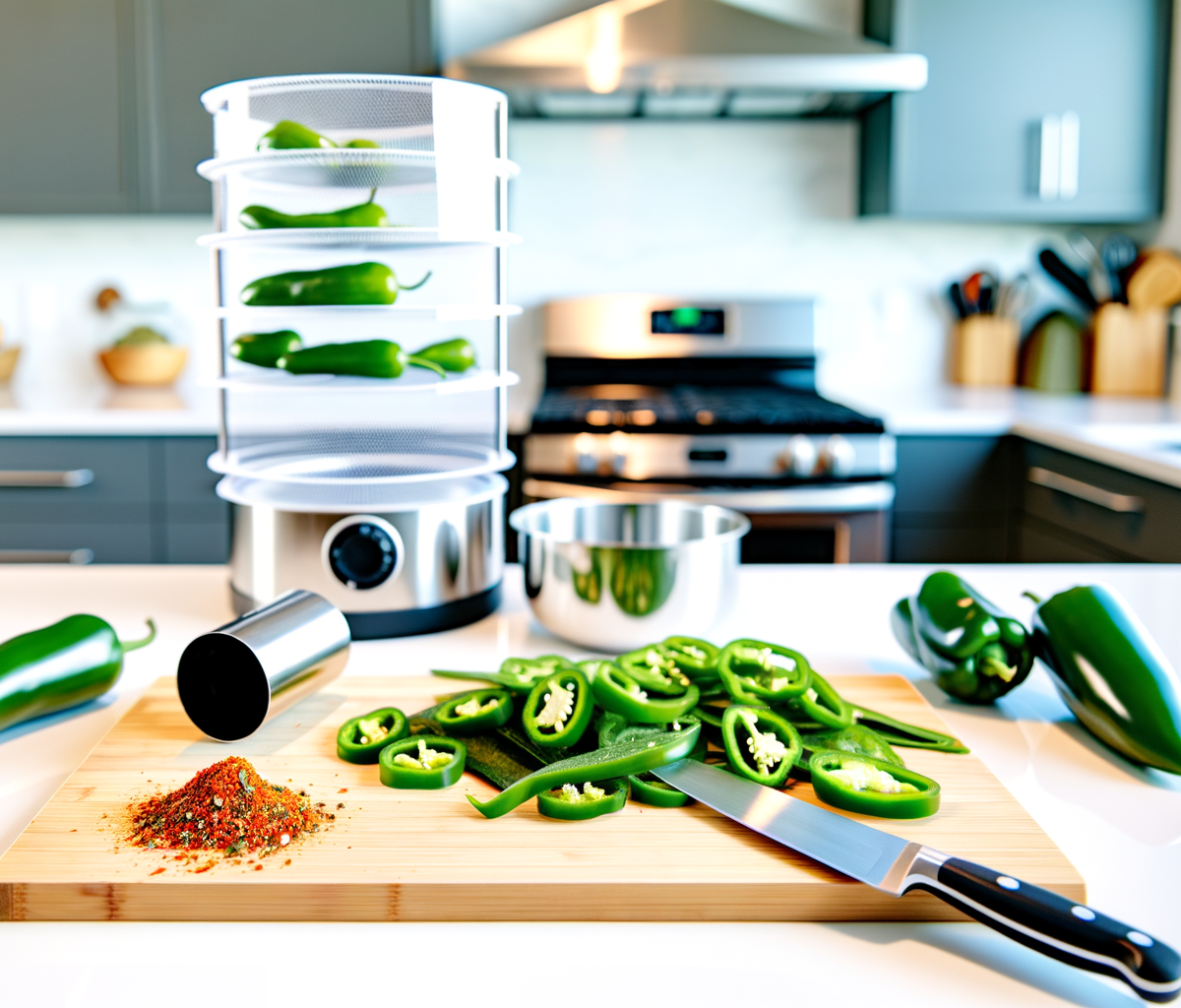
Dehydrating Jalapeños: How to Make Jalapeño Powder
Jalapeño powder is one of the most versatile spices you can make at home. It delivers the distinctive flavor of fresh jalapeños — that bright, grassy heat — in a shelf-stable form that lasts up to a year and works in almost any dish. Making it is straightforward: slice the peppers, dry them completely, grind them, and store. The entire process takes 6–12 hours depending on your method, and a pound of fresh jalapeños yields roughly 2–3 ounces of powder.
Whether you're preserving a garden surplus or just want a custom spice blend, homemade jalapeño powder beats store-bought every time. Here's exactly how to do it with each method.
Preparing the Jalapeños
Regardless of which drying method you use, preparation is the same:
- Wash the peppers thoroughly under cool running water
- Remove the stems by cutting a flat cap off the top
- Slice uniformly — 1/8-inch thick rings or lengthwise strips work best. Uniform thickness ensures even drying
- Decide on seeds and membranes — leaving them in makes hotter powder; removing them makes milder powder
- Wear gloves during all preparation — you'll be handling a lot of capsaicin
Tip: Using red jalapeños produces a powder with a slightly sweeter, more complex flavor and a reddish color. Green jalapeños produce a sharper, grassier powder with a green-brown color. Both are excellent.
Method 1: Food Dehydrator (Recommended)
A food dehydrator gives the most consistent results with the least effort.
Steps:
- Arrange jalapeño slices in a single layer on dehydrator trays, leaving space between pieces for airflow
- Set temperature to 135°F (57°C) — this is the optimal temperature for peppers
- Dehydrate for 8–12 hours, rotating trays every 3–4 hours if your dehydrator doesn't have even airflow
- Check at 8 hours — peppers are done when they're completely brittle and snap cleanly (not leathery or bendable)
Pros:
- Most consistent, even drying
- Set-it-and-forget-it operation
- Preserves the most flavor and color
- Energy efficient
Cons:
- Requires a dehydrator ($40–$100+)
- Takes the longest time
Method 2: Oven Drying
If you don't have a dehydrator, your oven works well with some attention.
Steps:
- Preheat oven to its lowest setting — ideally 170°F (77°C) or the lowest your oven goes
- Line baking sheets with parchment paper
- Arrange slices in a single layer without overlapping
- Prop the oven door open slightly (about 2 inches) with a wooden spoon — this allows moisture to escape and prevents the peppers from cooking instead of drying
- Dry for 6–8 hours, flipping slices every 2 hours
- Check frequently after hour 5 — oven drying can go from perfect to burned quickly
Pros:
- No special equipment needed
- Faster than dehydrator
- Works well for large batches
Cons:
- Higher energy cost (running oven for 6+ hours)
- Requires monitoring to prevent burning
- Less even drying than a dehydrator
- Heats up your kitchen
Important: If your oven's lowest setting is above 200°F, the peppers will likely cook rather than dehydrate, resulting in a darker color and slightly different flavor. Keeping the door cracked helps compensate.
Method 3: Air Drying
The oldest method, requiring no equipment but plenty of patience and the right climate. For a more detailed comparison of all pepper drying techniques, see our complete guide to drying peppers.
Steps:
- Thread a needle with strong thread or fishing line
- Pierce each pepper through the stem area and string them with 1–2 inches of space between each pepper
- Hang the string (a ristra) in a well-ventilated area with low humidity
- Wait 2–4 weeks until peppers are completely dry and brittle
Pros:
- Zero energy cost
- Traditional and decorative
- Works well for whole peppers
Cons:
- Only works in dry climates (below 60% humidity)
- Takes weeks instead of hours
- Risk of mold in humid environments
- Sliced peppers don't air dry well — use whole peppers for this method
Climate requirement: Air drying works best in the American Southwest, Mediterranean climates, or during dry winter months with indoor heating. If you live in a humid area, stick with the dehydrator or oven method.
Grinding into Powder
Once your jalapeños are completely dry (they should snap, not bend), it's time to grind.
Equipment options:
- Spice grinder or coffee grinder — the best option for fine, consistent powder. Dedicate a grinder to spices so your coffee doesn't taste like jalapeños
- Blender — works for larger batches but produces less uniform powder
- Mortar and pestle — traditional method, good for small batches and a coarser grind
- Food processor — functional but tends to leave larger pieces
Grinding process:
- Break dried peppers into smaller pieces by hand (wearing gloves)
- Add to grinder in small batches — don't overfill
- Pulse in 5-second bursts until desired fineness
- For ultra-fine powder, sift through a fine mesh strainer and re-grind any large pieces
- Critical safety step: Do NOT open the grinder immediately after grinding. Wait 30–60 seconds for the capsaicin dust to settle. Opening it while airborne particles are swirling will cause intense coughing and eye irritation
Ventilation warning:
Grinding dried peppers releases capsaicin into the air. Do this in a well-ventilated area or outdoors. Consider wearing a simple dust mask if grinding large quantities. This applies even to jalapeños — hotter peppers like cayenne or ghost peppers are much worse, but jalapeño dust is no joke either.
Storage
Proper storage keeps jalapeño powder potent for up to 12 months:
- Container: Airtight glass jars (mason jars work perfectly) or spice jars with tight-fitting lids
- Location: Cool, dark cupboard away from the stove. Heat and light degrade capsaicin and flavor compounds
- Moisture: The biggest enemy. Ensure peppers were 100% dry before grinding, and never use a wet spoon in the jar
- Labeling: Mark the jar with the date made and pepper variety
After about 6 months, the powder will gradually lose potency. It's still safe to use but you may need more to achieve the same flavor and heat.
Uses for Jalapeño Powder
Homemade jalapeño powder is incredibly versatile:
- Seasoning rubs for grilled chicken, pork, or fish
- Sprinkled on popcorn for spicy movie night snacking
- Mixed into marinades and BBQ sauces
- Added to soups and stews — dissolves easily for even heat distribution
- Blended into spice mixes — combine with garlic powder, cumin, and oregano for a custom taco seasoning
- Rim seasoning for margaritas and Bloody Marys
- Baked goods — a pinch in chocolate brownies or cookies adds intriguing warmth
- Scrambled eggs and omelets — a quarter teaspoon transforms breakfast
- Homemade hot sauce — rehydrate with vinegar for a quick sauce base
Frequently Asked Questions
How much powder does a pound of fresh jalapeños make?
Approximately 2–3 ounces (1/3 to 1/2 cup). Fresh peppers are roughly 90% water, so the weight reduction is dramatic.
Is jalapeño powder hotter than fresh jalapeños?
By weight, yes — significantly. The drying process concentrates the capsaicin. A teaspoon of jalapeño powder contains the capsaicin equivalent of roughly 2–3 fresh jalapeños. Start with small amounts and adjust up.
Can I mix jalapeño powder with other dried peppers?
Absolutely. Blending jalapeño with dried chipotle creates a smoky-fresh combination. Adding dried cayenne boosts the heat. Custom blends are one of the best reasons to make your own powder.
How do I know if the peppers are dry enough to grind?
They should snap cleanly in half with a crisp break. If they bend, feel leathery, or don't break cleanly, they need more drying time. Any remaining moisture will cause the powder to clump and potentially develop mold.
More from the Blog
How to Roast Jalapeños: 4 Methods Compared
From oven broiler to air fryer, here are four tried-and-true methods for roasting jalapeños to smoky, blistered perfection — with temps, times, and pros and cons for each.
BlogHow to Reduce Jalapeño Heat Without Losing Flavor
Too much jalapeño burn? These six techniques tame the heat while keeping the pepper flavor you love — from seed removal to acid balancing and smart substitutions.
BlogHow to Make Chipotles at Home: Smoke Your Own Jalapeños
Turn ripe red jalapeños into rich, smoky chipotles at home using a smoker, charcoal grill, or even your oven. Plus, learn how to make your own adobo sauce from scratch.