Raised Bed vs Container: Best Way to Grow Jalapeños
Choosing between raised beds and containers for growing jalapeños? We compare yield, cost, watering needs, and more to help you pick the best option for your space.
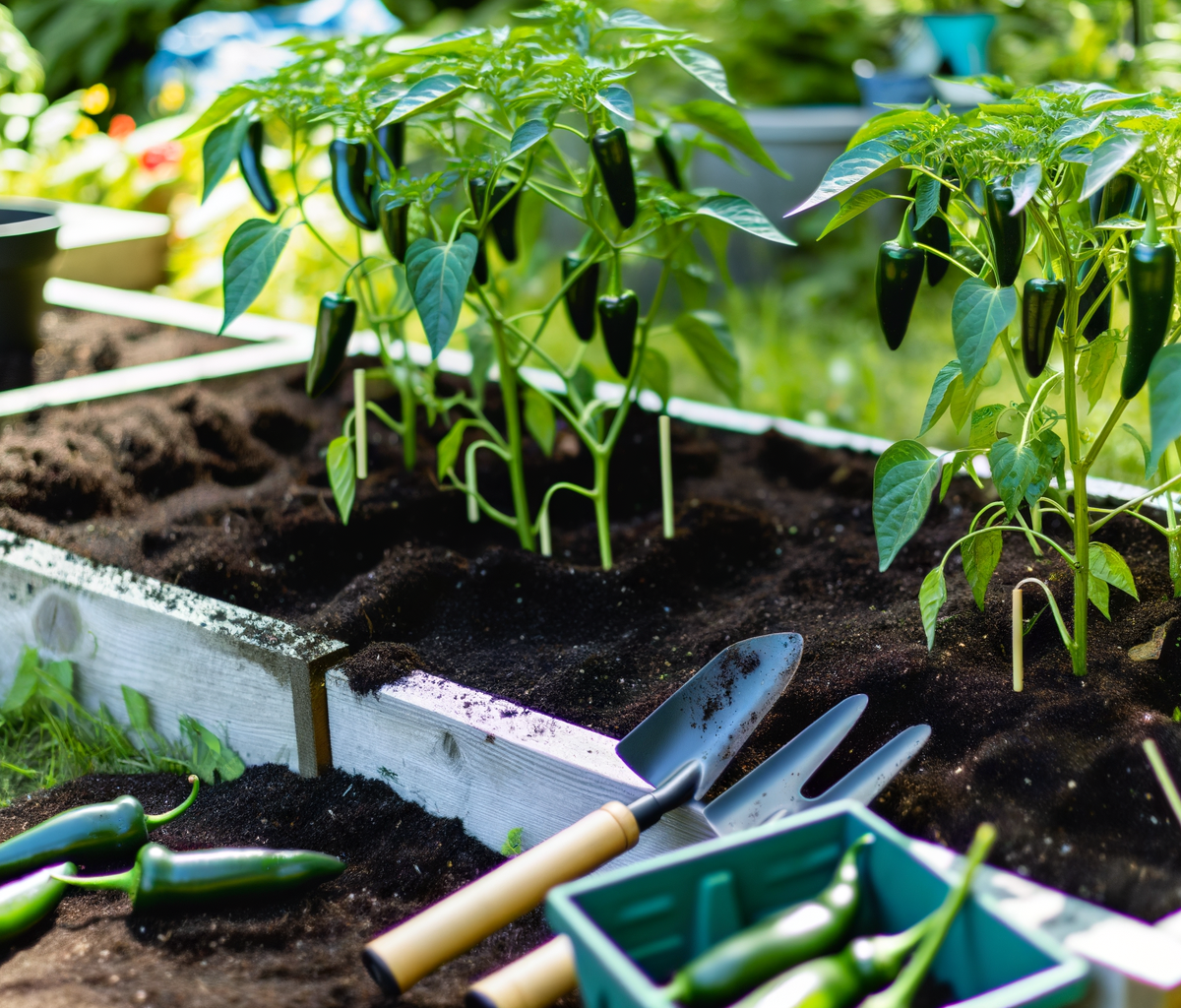
Raised Bed vs Container: Best Way to Grow Jalapeños
If you've got jalapeño seeds in hand and you're deciding where to plant them, the choice often comes down to two popular options: raised beds and containers. Both work well for jalapeños — this isn't a case where one is clearly superior. The best choice depends on your space, budget, climate, and how many peppers you want to grow.
Here's the bottom line up front: raised beds produce higher overall yields and require less daily maintenance, while containers offer flexibility, portability, and are ideal for small spaces. Let's break down exactly why.
Quick Comparison Table
| Factor | Raised Bed | Container |
|---|---|---|
| Yield per plant | 30–50 peppers | 20–35 peppers |
| Watering frequency | Every 2–3 days | Daily (hot weather) |
| Startup cost | $50–$200+ | $10–$30 per pot |
| Space needed | 4×4 ft minimum | 2×2 ft per pot |
| Portability | Fixed | Fully portable |
| Soil volume per plant | 2–4 cubic ft | 0.5–1 cubic ft |
| Root space | Unrestricted | Limited by pot size |
| Best for | Maximizing harvest | Flexibility and small spaces |
Raised Beds: The Pros
Higher Yields
The single biggest advantage of raised beds is more root space. Jalapeño roots can spread 12 to 18 inches deep and equally wide. In a raised bed, roots grow freely through a large volume of soil, which translates directly to bigger plants and more peppers.
A jalapeño plant in a well-maintained raised bed typically produces 30 to 50 peppers per season, compared to 20 to 35 in a container. That difference adds up fast if you're growing multiple plants.
Better Moisture Retention and Soil Control
A raised bed holds moisture far more evenly than a container. The larger soil mass acts as a buffer — it dries out slowly, which means less frequent watering and fewer stress-inducing moisture swings. During peak summer heat, raised bed jalapeños may only need watering every 2 to 3 days compared to daily for containers.
You also fill a raised bed with exactly the soil mix you want — a huge advantage if your native soil is heavy clay or sandy. See our soil, water, and sunlight guide for recommended mixes.
Room for Companion Plants
Raised beds give you space to grow companion plants alongside your jalapeños. Basil, marigolds, and tomatoes all pair well with peppers and can help with pest control and pollination.
Raised Beds: The Cons
- Not portable: Once built and filled, they're staying put. If your sun exposure changes or you move, the bed stays behind.
- Higher upfront cost: Lumber, hardware, and soil to fill a 4×4×1 ft bed can cost $100 to $200 or more depending on materials.
- Permanent commitment: They take up yard space year-round, even when not in use.
- Potential drainage issues: If not built properly or placed on poorly draining ground, raised beds can become waterlogged.
Containers: The Pros
Total Portability
This is the killer feature. Container jalapeños can be moved to chase sunlight, brought indoors before frost, sheltered from storms, and relocated when you move to a new home. For renters and gardeners with shifting sun conditions, this flexibility is invaluable.
Portability also makes overwintering much simpler. Instead of digging up in-ground plants, you just carry the pot inside.
Small Space Friendly
No yard? No problem. A single 5-gallon container on a balcony, patio, or even a sunny doorstep is enough to grow a productive jalapeño plant. For apartment and condo dwellers, containers are often the only option — and they work surprisingly well. Our guide on the best peppers for container gardening covers variety selection and pot sizing in detail.
Lower Startup Cost
A 5-gallon nursery pot or fabric grow bag costs $3 to $10. Add another $5 to $10 for potting mix and you're in business for under $20 per plant. Compare that to $100+ for a raised bed setup.
Warmer Root Zone
Containers — especially dark-colored ones — absorb solar heat and warm the soil faster in spring. This can give container jalapeños a 1 to 2 week head start on growth compared to raised beds or in-ground plants in cooler climates.
Containers: The Cons
- Limited root space: Even a 5-gallon pot constrains growth compared to a raised bed, directly impacting yield.
- Frequent watering: Small soil volume dries fast. Daily watering is common in summer heat.
- Nutrient depletion: You'll need to fertilize every 1 to 2 weeks as the small soil volume depletes faster.
- Root bound risk: Use at least a 5-gallon pot per plant — 7 to 10 gallons is better.
Watering Needs
This is where the two methods diverge most in day-to-day care.
| Condition | Raised Bed | Container (5 gal) |
|---|---|---|
| Spring (mild temps) | 2× per week | Every other day |
| Summer (hot temps) | Every 2–3 days | Daily |
| Peak heat (90°F+) | Daily | Twice daily |
| Fall (cooling) | 2× per week | Every other day |
For containers, self-watering pots with built-in reservoirs can reduce watering frequency significantly and are worth the small extra cost.
Yield Comparison
Based on typical home garden conditions with standard jalapeño varieties, raised beds produce 30 to 50 peppers per plant, a 5-gallon container produces 20 to 30, and a 10-gallon container produces 25 to 40. The gap narrows with larger containers, though watering demands remain higher.
The Verdict
Choose raised beds if: You have permanent yard space, want to maximize your harvest, grow multiple plants, and don't mind the upfront investment. Raised beds are the set-it-and-forget-it option that rewards you with bigger yields and less daily maintenance.
Choose containers if: You rent, have limited space, want to move plants for sun or overwintering, or are just getting started and want a low-cost way to try growing jalapeños. Containers are forgiving of commitment and perfect for 1 to 3 plants.
The hybrid approach: Many experienced growers use both. Raised beds for the main crop and a few containers for experimenting with new varieties like serranos or cayenne that can be moved around as needed.
FAQ
Can I grow jalapeños in a 3-gallon container?
You can, but yields will be noticeably lower — expect 10 to 20 peppers. A 5-gallon minimum is strongly recommended, and 7 to 10 gallons is ideal for full production.
How deep should a raised bed be for jalapeños?
A minimum of 10 to 12 inches deep. Jalapeño roots typically extend 12 to 18 inches, so deeper beds (16 to 18 inches) produce better results. If your bed sits on decent native soil, roots will grow down into it for additional depth.
Do I need drainage holes in a raised bed?
Raised beds sitting on the ground drain naturally through the bottom. If your raised bed has a solid bottom (like on a patio), you absolutely need drainage holes. Standing water kills pepper roots quickly.
Can I mix peppers with other plants in the same container?
It's not recommended. Jalapeños need the full root space of their container. Adding other plants creates competition for water and nutrients in an already limited space. Use separate containers for companion plants and place them nearby instead.
More from the Blog
How to Grow Jalapeños Indoors: Complete Apartment Guide
Everything you need to know about growing jalapeño peppers indoors, from choosing the right containers and soil to hand-pollination and harvesting in your apartment.
BlogWhy Are My Jalapeño Leaves Turning Yellow? 7 Causes & Fixes
Yellowing jalapeño leaves are usually caused by overwatering, nutrient deficiencies, or pest damage. Here are 7 common causes and exactly how to fix each one.
BlogWhen to Pick Jalapeños: The Perfect Harvest Timing Guide
Learn exactly when to pick jalapeños for the best flavor and heat. Covers visual cues like size, color, and corking to help you harvest at the perfect time.