Jalapeño vs Chipotle: Same Pepper, Different Flavor
Here's a fact that surprises many people: chipotle peppers are just smoked, dried jalapeños. Same pepper, completely different flavor profile and culinary personality.
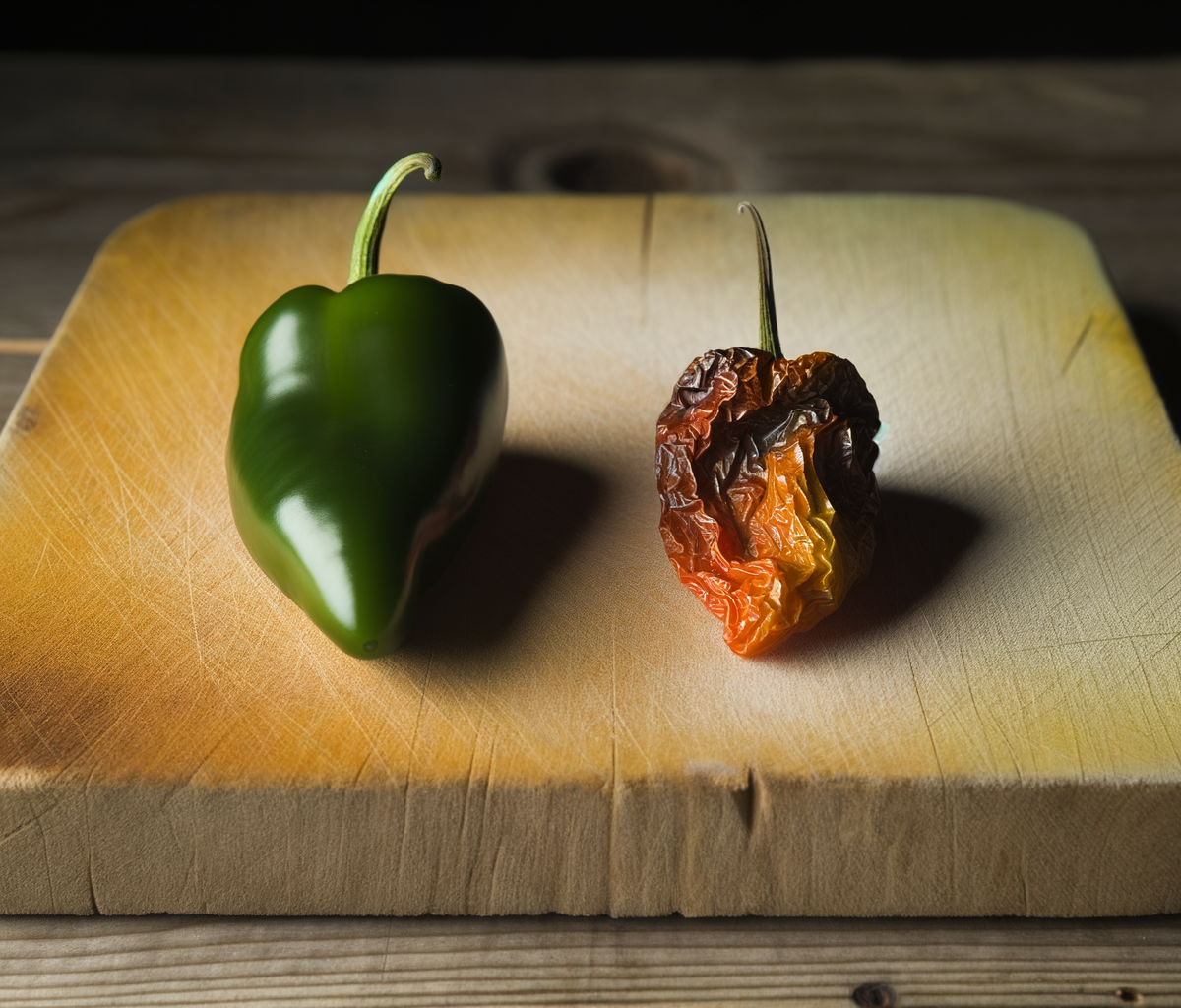
Jalapeño vs Chipotle: Same Pepper, Different Flavor
Here's something that surprises a lot of people: a chipotle isn't a separate pepper variety at all. It's a jalapeño that has been smoke-dried, transforming it into something that tastes entirely different from its fresh form. The smoking process changes the flavor, texture, heat perception, and culinary uses so dramatically that most people never realize they're the same pepper. Understanding this connection can make you a better cook with both.
| Feature | Jalapeño (Fresh) | Chipotle (Smoked Jalapeño) |
|---|---|---|
| Scoville Heat Units | 2,500–8,000 SHU | 2,500–8,000 SHU |
| Form | Fresh, crisp | Dried, wrinkled, or in adobo sauce |
| Flavor | Bright, grassy, vegetal | Smoky, earthy, deep, complex |
| Texture | Thick-walled, juicy | Leathery (dried) or soft (in adobo) |
| Color | Green or red | Dark brown to burgundy |
| Water Content | High (~90%) | Very low (~10% when dried) |
Heat & Scoville Comparison
Since chipotles are just dried jalapeños, they technically share the same Scoville rating of 2,500 to 8,000 SHU. However, the heat experience feels different. When you bite into a fresh jalapeño, the heat hits quickly and cleanly. With a chipotle, the heat builds more gradually and feels deeper, almost warmer rather than sharp.
This difference happens because the drying and smoking process concentrates the capsaicin while also surrounding it with complex smoky compounds that change how your palate perceives the burn. Many people describe chipotle heat as more "rounded" compared to the "bright" heat of a fresh jalapeño. The capsaicin is the same, but the delivery is transformed.
Flavor Profile
This is where the jalapeño-to-chipotle transformation truly shines. Fresh jalapeños taste bright, grassy, and slightly peppery with a clean, crisp bite. They have a vegetal quality that works beautifully in fresh salsas, salads, and anywhere you want a pop of green pepper flavor with moderate heat.
Chipotles are a completely different experience. The smoking process — traditionally done over pecan or mesquite wood for days — adds layers of smoky, earthy, almost chocolatey complexity. When packed in adobo sauce (the most common form in stores), chipotles gain additional depth from the tangy, slightly sweet tomato-based sauce. The flavor is rich, warm, and deeply savory. It's no wonder chipotles have become one of the most popular flavoring ingredients in modern cooking.
Best Uses in Cooking
Fresh jalapeños excel in preparations that highlight their bright, crisp character. Think green sauces, pico de gallo, stuffed poppers, pickled rings, or sliced raw on tacos. They add a fresh punch of heat and a satisfying crunch.
Chipotles shine in slow-cooked, hearty, and deeply flavored dishes. Chipotle BBQ sauce is a classic application, but they're also fantastic in chili con carne, braised meats, enchilada sauce, and marinades. Chipotle in adobo is one of the most useful ingredients in a home cook's pantry — a spoonful adds instant depth to soups, stews, dressings, and even mayo. You can also rehydrate whole dried chipotles and blend them into sauces and moles.
A great trick is to use both forms in the same dish. Fresh jalapeño adds brightness on top, while chipotle in the base provides smoky depth. Together, they create a layered pepper flavor that's hard to achieve with just one form.
Growing Comparison
Since chipotles start as jalapeños, the growing process is identical up to harvest. You grow jalapeño plants the same way regardless of the pepper's final destination. The difference is in what happens after picking.
For fresh jalapeños, you harvest the peppers while they're green and firm. For chipotles, you let the jalapeños ripen fully to red on the plant, then smoke-dry them over low heat for several days until they become dark, wrinkled, and leathery. Traditional chipotle production in Mexico uses smoking chambers where ripe red jalapeños are dried over smoldering wood for 3 to 5 days.
If you grow jalapeños at home, you can make your own chipotles using a smoker set to around 200°F. It takes patience — usually 8 to 12 hours in a modern smoker — but the result is incredibly rewarding and far more flavorful than store-bought versions.
Availability & Price
Fresh jalapeños are one of the most affordable and accessible peppers available, costing $1 to $3 per pound at virtually any grocery store year-round.
Chipotle peppers are most commonly sold canned in adobo sauce, with a small can (7 ounces) typically costing $2 to $4. Dried whole chipotles are available at Mexican markets and specialty stores for $4 to $8 per ounce. Chipotle powder is another convenient option, usually $5 to $10 per jar. Because a little chipotle goes a long way, even a single can of chipotles in adobo can flavor many meals.
Which Should You Choose?
You don't have to choose — having both in your kitchen is the best strategy. Keep fresh jalapeños on hand for bright, fresh preparations and a can of chipotles in adobo for when you want deep, smoky flavor. They complement each other beautifully.
If you're making something fresh, cool, or raw, reach for the jalapeño. If you're building a rich, warm, slow-cooked dish, the chipotle is your friend. And if you want to explore how eating spicy food benefits your health, both forms deliver the same capsaicin — just in very different flavor packages.
FAQ
Are chipotles hotter than jalapeños? Not inherently. Since chipotles are dried jalapeños, they have the same Scoville range of 2,500 to 8,000 SHU. However, because drying concentrates the pepper, you may use more capsaicin by weight compared to fresh jalapeños.
Can I make chipotles at home? Yes. Grow or buy ripe red jalapeños, then smoke them at low heat (around 200°F) for 8 to 12 hours until they're dry and leathery. You can use a standard smoker or even try other drying methods as a starting point.
What is adobo sauce? Adobo sauce is a tangy, slightly sweet sauce made from tomatoes, vinegar, garlic, and spices. Canned chipotles in adobo are the most common way chipotles are sold in the United States and are incredibly versatile.
Why are my chipotles hotter than expected? Some jalapeños are naturally hotter than others, and the drying process concentrates their heat. If a batch of jalapeños was on the hotter end of the spectrum before smoking, the resulting chipotles will be spicier too.
More from the Blog
Jalapeño vs Habanero: How Different Are They Really?
Jalapeños and habaneros are two of the most popular chili peppers in the world, but they couldn't be more different. Here's everything you need to know about how they compare in heat, flavor, and cooking uses.
BlogJalapeño vs Poblano: Choosing the Right Pepper
Jalapeños and poblanos are both Mexican kitchen essentials, but they serve very different purposes. Here's how to choose between them for your next recipe.
BlogJalapeño vs Cayenne: Heat, Flavor & Cooking Uses
Jalapeños and cayenne peppers are both kitchen staples, but one is usually eaten fresh while the other dominates the spice rack. Here's a detailed comparison of heat, flavor, and the best ways to use each.